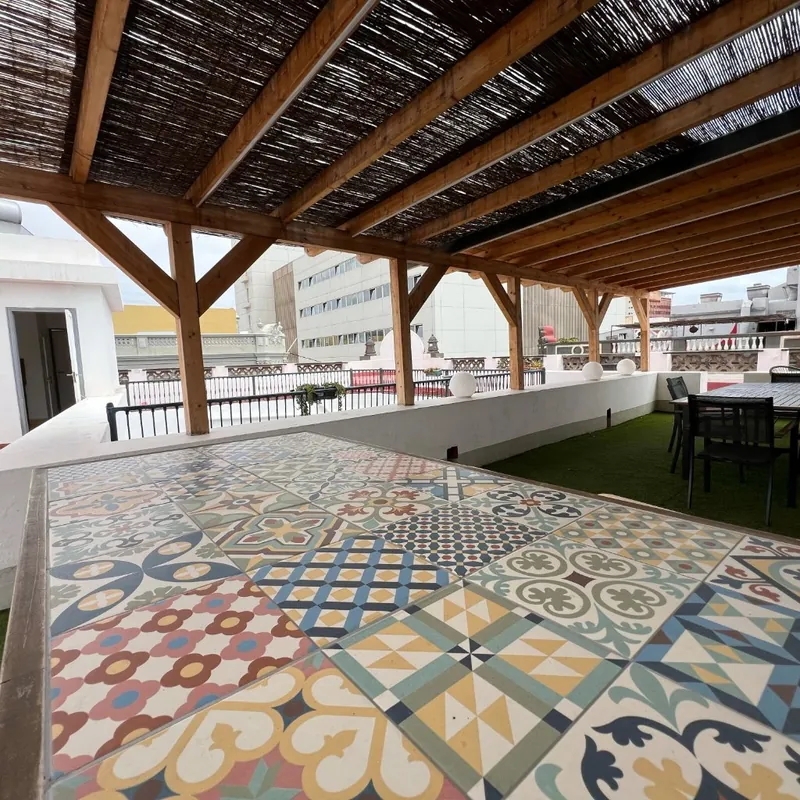
I’ve done all three extensively. Months in Airbnbs across Europe and Latin America. Hostel stints in Southeast Asia when I was starting out. And three years running Casa Basilico, a pop-up coliving for digital nomads. I have opinions, and I’m going to share them honestly.
The short answer: coliving is the best option for most remote workers staying 1-3 months. But “most” isn’t “all,” and there are specific situations where Airbnb or even a hostel makes more sense. Let me break it down.
The comparison table
| Coliving | Airbnb | Hostel | |
|---|---|---|---|
| Monthly cost (Lisbon) | 700-1,200 EUR | 1,200-2,000 EUR | 600-1,200 EUR (20-40/night) |
| Monthly cost (Chiang Mai) | 400-900 EUR | 500-800 EUR | 300-600 EUR (10-20/night) |
| Monthly cost (Mexico City) | 600-1,200 EUR | 800-1,500 EUR | 450-900 EUR (15-30/night) |
| Privacy | Private room | Full apartment | Shared dorm or private room |
| Community | Built-in, curated | None (you’re alone) | Random, transient |
| Workspace | Dedicated coworking | Kitchen table | Maybe a common area |
| WiFi reliability | High (it’s their business) | Lottery | Usually fine, sometimes not |
| Cleaning | Included | Sometimes included | Included |
| Kitchen | Shared, well-equipped | Private, variable quality | Shared, often chaotic |
| Min commitment | 2 weeks - 1 month | 1 night | 1 night |
| Setup effort | Apply, book, show up | Search, book, figure it out | Walk in |
| Social life | Guaranteed | Zero unless you work at it | Party-oriented |
| Who’s there | Remote workers | Tourists, locals, anyone | Backpackers, travelers |
| Typical stay | 1-3 months | 3-30 days | 1-7 nights |
Cost: the real math
People compare the sticker price and stop there. That’s wrong. Here’s what a month actually costs in Lisbon:
Coliving (e.g., Sun and Co. or similar): 900-1,200 EUR/month. That includes your room, WiFi, coworking space, utilities, weekly cleaning, and community events. Total: 900-1,200 EUR.
Airbnb: A decent one-bedroom in Lisbon runs 1,200-1,800 EUR/month. Add coworking membership (150-250 EUR), utilities if not included (50-100 EUR), and cleaning (100 EUR if you want it weekly). Total: 1,500-2,250 EUR.
Hostel (private room): 30-50 EUR/night = 900-1,500 EUR/month. Add coworking (150-250 EUR) because you can’t work from a hostel bunk bed. Total: 1,050-1,750 EUR.
Hostel (dorm bed): 15-25 EUR/night = 450-750 EUR/month. Same coworking add-on. Total: 600-1,000 EUR.
The math is clear: coliving is cheaper than Airbnb and comparable to a hostel private room — but with dramatically better workspace and community. The only cheaper option is a hostel dorm, and if you’re trying to work 8 hours a day from a bunk bed, I wish you luck.
In cheaper destinations the gap narrows. In Chiang Mai, an Airbnb and a coliving like Alt Coliving might cost similar amounts. But the coliving still includes coworking and community that you’d pay for separately.
Community: the real differentiator
This is where the three options diverge most, and it’s the thing that’s hardest to put a price on.
Coliving community
Everyone is there for the same reason: to live and work somewhere interesting while building connections. The community is curated — most colivings have an application process that filters out party tourists and short-term travelers. You eat dinner with the same 10-20 people for a month. You know their names, their projects, their weird food preferences. Some of these people will become genuine friends.
At Casa Basilico, we’ve seen business partnerships start over a shared meal, couples form, and friendships that span years and continents. That’s not marketing — it’s what happens when you put interesting people in a kitchen together for a month.
Airbnb “community”
There is none. You’re in an apartment by yourself (or with your partner). Your neighbors don’t know you exist. If you want social interaction, you need to actively seek it out — join coworking spaces, go to meetups, use apps. Some people thrive on this independence. But I’ve watched dozens of nomads arrive at a new city with an Airbnb booking, full of plans to “meet people,” and spend most evenings alone watching Netflix. The activation energy to build a social life from scratch every month is real, and most people underestimate it.
Hostel community
Hostels have community, but it’s the wrong kind for remote workers. The vibe is vacation. People are there for 2-3 nights, they want to drink and explore, and they leave. You’ll have fun conversations at 11 PM, but those people check out the next morning. The community resets every few days. It’s impossible to build meaningful relationships when the roster changes constantly.
There’s also a maturity gap. Hostels skew younger (18-25) and more budget-focused. If you’re 30+ and trying to build a career, the gap between your priorities and the average hostel guest’s priorities is significant.
Workspace quality
Coliving
Built for remote work. Dedicated desks, ergonomic chairs, fast WiFi with backup connections, phone booths for calls, quiet hours. Places like Mokrin House and Coconat have coworking spaces that rival WeWork. The WiFi is tested and guaranteed because if it fails, the entire business fails. This isn’t an afterthought — it’s the core product.
Airbnb
A kitchen table and whatever WiFi the landlord set up three years ago. Some Airbnbs have decent desks and fast internet. Many don’t. You’re rolling the dice. I’ve lost count of the Airbnbs I’ve booked that advertised “fast WiFi” and delivered 10 Mbps with drops during the afternoon when the neighbors started streaming. For a week, you can deal with it. For a month of client calls, it’s unacceptable.
Hostel
A common area with couches, maybe a table. The WiFi is shared with 50-100 guests, half of whom are on video calls with family. Background noise from the bar. No monitors, no ergonomic chairs, no phone booths. Some upscale hostels have “coworking corners,” but they’re usually a desk in the lobby. Not serious.
Flexibility and commitment
This is where Airbnb and hostels win.
Airbnb: Book for a few nights, extend if you like it. No application process, no minimum stay (usually). Maximum flexibility. If you’re city-hopping every 1-2 weeks, Airbnb is practical in a way colivings aren’t.
Hostels: Walk in, get a bed, leave when you want. Zero commitment. Perfect for first few days in a new city while you get your bearings.
Coliving: Most require a minimum stay of 2 weeks to 1 month. Many have an application process. You commit in advance. This is by design — you can’t build community with people who leave after 3 days — but it means less flexibility. If you’re unsure about a destination, you might not want to lock in a month. Some colivings like Outsite offer weekly stays, which is a nice middle ground.
Privacy
Airbnb wins this one outright. Your own apartment, your own kitchen, your own bathroom. You walk around in your underwear at 3 AM. Nobody cares.
Coliving gives you a private room (sometimes with an ensuite bathroom) but shared common spaces. You’ll hear your housemates in the kitchen at night. The walls aren’t always thick. If you need total control over your environment — silence, temperature, lighting — coliving will frustrate you.
Hostels are the worst for privacy. Even private rooms in hostels have thin walls and party noise. Dorm beds mean zero privacy. If you work odd hours or need quiet, a hostel is a non-starter.
When to choose each
Choose coliving when:
- You’re staying 1-3 months in one place
- Community and social life matter to you
- You need reliable WiFi and a proper workspace
- You want zero setup hassle (furnished, utilities included, WiFi tested)
- You’re a remote worker, not a tourist
- You’re open to being part of a group and sharing spaces
Good starting points: KoHub if you’re budget-conscious, Sun and Co. or Nine Coliving for Europe, WiFi Tribe if you want the premium pop-up experience.
Choose Airbnb when:
- You’re staying less than 2 weeks (too short for coliving to make sense)
- You’re traveling with a partner or family and need private space
- You’re an extreme introvert who recharges only in total solitude
- You already have an established social network in the destination
- You need specific amenities (home office setup, particular kitchen equipment, pet-friendly)
- You have a proven system for building social connections independently
Choose a hostel when:
- You just arrived in a city and need 2-3 nights to get oriented
- You’re traveling, not living — vacation mode, not work mode
- Budget is your absolute top priority and you’re comfortable in dorms
- You’re under 25 and meeting people comes naturally everywhere
- You’re between colivings or Airbnbs and need a bridge
The hybrid approach
Here’s what I actually recommend to people starting out: fly into a new city, book a hostel for 3-4 nights to explore neighborhoods and get your bearings. Then move into a coliving for a month. If you want to extend but need a change of scene, Airbnb for a week before your next coliving. This gives you the flexibility of short-term stays with the community benefits of coliving.
The honest bottom line
If you’re a remote worker staying somewhere for a month or more, coliving is almost always the best option. It’s not the cheapest (hostel dorms are), and it’s not the most private (Airbnbs are). But it’s the only option that solves the loneliness problem — the thing nobody talks about in the “work from anywhere” dream.
I’ve watched people bounce between Airbnbs for a year and wonder why they feel disconnected. I’ve seen nomads try to build a social life from scratch in every new city, burning energy on logistics instead of living. Coliving skips all of that. You show up, you have a desk, you have WiFi, and you have 10-20 interesting people who already want to be your friend. That’s worth a lot more than the price difference.