Coliving in Brussels
Brussels is Europe's undervalued capital — world-class food and beer, central location with fast trains everywhere, genuinely international population, and prices that make Paris and Amsterdam look greedy.
Brussels is the European capital that nomads overlook, usually because they’ve never been or they came for a weekend and only saw the Grand Place. The real Brussels is a city of 19 communes, each with its own character, connected by a decent metro and tram network. The food is objectively excellent — Belgian frites, moules, waffles, and chocolate are famous, but the real story is the diversity: Ethiopian on Matongé, Turkish in Schaerbeek, Portuguese in Saint-Gilles, and a fine dining scene anchored by generations of French culinary influence.
The cost of living is the pleasant surprise. A studio apartment in a good neighborhood runs €650-1,000/month — significantly less than Paris (1.5 hours by train), Amsterdam (2 hours), or London (2 hours). The central location makes Brussels a practical hub: day trips to Bruges, Ghent, Antwerp, or even Paris and Amsterdam are easy by train.
Why Brussels for coliving
Location and value. Brussels puts you in the geographic center of Western Europe with high-speed rail connections in every direction. The international community (thanks to EU institutions, NATO, and hundreds of international organizations) means English works for daily life, the expat infrastructure is mature, and you’ll meet people from everywhere.
The coworking scene is solid — Silversquare, Fosbury & Sons, and several independent spaces cater to the international professional community. The coliving market is developing, with a few operators offering furnished rooms with community and flexibility.
The nomad scene
Brussels’ remote work community is heavily influenced by the EU institutional world — consultants, policy advisors, and NGO workers who work independently or remotely. The pure nomad community is smaller than Lisbon or Barcelona, but the international professional community is enormous. Regular networking events, international meetups, and a thriving coworking culture make it easy to build a professional network. The city attracts people who are interested in policy, sustainability, and international affairs — a different flavor from the typical tech-nomad scene.
Colivings in Brussels
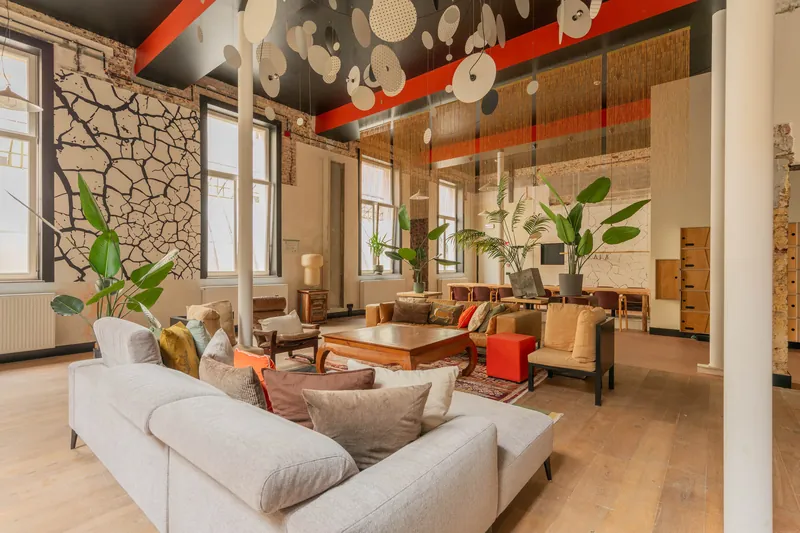
1 coliving with chapters in Brussels
Where to stay in Brussels
Ixelles / Flagey
The international neighborhood. Flagey square has the best people-watching in Brussels, surrounded by cafes, bars, and the Ixelles ponds. Huge African food scene on Matongé. Diverse, walkable, and well-connected. The top choice for most remote workers.
Saint-Gilles
Art Nouveau architecture, diverse food scene, Parvis de Saint-Gilles square for outdoor drinks. Cheaper than Ixelles, equally interesting. Growing creative and startup scene. Some streets are rougher — visit before committing.
Etterbeek / EU Quarter
Near the European institutions. Lots of international workers, good infrastructure, somewhat sterile atmosphere. Practical but lacks neighborhood soul. Better for people who prioritize convenience.
Schaerbeek
North of center, multicultural and rapidly gentrifying. Turkish and Moroccan food, emerging cafe culture, cheaper rents, beautiful Art Nouveau townhouses. Requires some French/Dutch for daily interactions.
Monthly expenses in Brussels
| Private room (coliving) | €500-850/month |
| Studio apartment | €650-1,100/month |
| Coworking membership | €120-250/month |
| Meal at local restaurant | €10-18 |
| Coffee | €2.50-3.50 |
| Beer at a bar | €3-5 |
| Monthly groceries | €250-380 |
| Monthly transport pass | €49 (STIB/MIVB) |
Quick facts
Last verified: April 2026. Prices and availability change — always check with operators directly.
Common Questions
Is Brussels boring?
This is the most common misconception. Brussels has better food than Paris (fight me), the world's best beer scene, a genuinely diverse population (190+ nationalities), and a cultural calendar that includes excellent jazz, electronic music, and contemporary art. What it lacks is the self-promotion of Paris or Amsterdam. Brussels is an acquired taste — but once acquired, it's hard to leave.
Do I need French or Dutch?
In the international bubble (EU quarter, Ixelles), English is fine. For daily life — markets, local restaurants, government offices — French is the dominant language. Dutch is officially co-equal but less commonly heard in central Brussels. Learning basic French dramatically improves the experience.
How's the beer?
World-class, and this isn't hyperbole. Belgium has over 1,500 distinct beers. Brussels has bars with 300+ bottle lists, lambic breweries making spontaneously fermented beers you can't get anywhere else, and a pub culture that takes beer as seriously as France takes wine. Budget €3-5 per beer at a bar, more for special bottles.