🇪🇸 Digital Nomad Visa Spain
Digital Nomad Visa (Ley de Startups — International Teleworking Visa)
What you need to apply
The honest breakdown
What's good
- One of the longest initial durations in Europe (3 years)
- Path to permanent residency after 5 years
- Access to Spain's public healthcare system
- Schengen zone — travel freely across 27 EU countries
- Special tax regime can significantly reduce your tax burden
- Family members can apply together
Watch out for
- Income threshold is high compared to cost of living in cheaper Spanish cities
- Bureaucracy is slow — apostilles and translations take weeks
- Must prove you've been employed/freelancing for at least 3 months before applying
- Spanish tax residency means worldwide income reporting
- Health insurance requirement is strict — many travel insurance policies don't qualify
What it means for your taxes
Special tax regime available: flat 24% income tax on Spanish-sourced income for first 4 years (Beckham Law equivalent for remote workers). Non-Spanish income taxed at progressive rates unless you qualify for the impatriate regime.
Official source: Always verify current requirements at Spanish Ministry of Foreign Affairs before applying. Regulations change frequently.
Spain launched its Digital Nomad Visa in January 2023 under the Ley de Startups (Startup Law), making it one of the first major EU countries to offer a dedicated visa for remote workers. The visa lets you live and work in Spain for up to 3 years while employed by or freelancing for companies outside Spain.
Why Spain works for remote workers
Spain combines fast internet (average 200+ Mbps in cities), low cost of living outside Madrid and Barcelona, and a lifestyle that digital nomads consistently rank among the best in Europe. Cities like Valencia, Malaga, and the Canary Islands offer coworking scenes, mild weather year-round, and a social culture built around long meals and late nights.
The digital nomad community in Spain is well-established. Barcelona and Madrid have large nomad populations, but the real value is in mid-size cities: Valencia has a growing tech scene with rents half of Barcelona’s. Las Palmas in Gran Canaria has the best climate in Europe and a coworking cafe on every block. Malaga is investing heavily in tech infrastructure and has direct flights across Europe.
Application process
- Gather documents (2-4 weeks): employment contract or freelance proof, criminal record certificate (apostilled), health insurance policy, proof of income (bank statements or tax returns).
- Get translations and apostilles: All non-Spanish documents need official sworn translations and Hague apostilles. This is the most time-consuming step.
- Submit application: Either at a Spanish consulate abroad or at an Oficina de Extranjeria if already in Spain.
- Wait for processing: Official timeline is 20 business days, though in practice it can take 1-3 months depending on the office.
- Receive your TIE card: Once approved, you’ll get a Tarjeta de Identidad de Extranjero (foreigner ID card) valid for up to 3 years.
Cost of living snapshot
A comfortable remote work lifestyle in Spain costs €1,500-2,500/month depending on the city. In Valencia or Malaga, a private apartment runs €700-1,000/month. Groceries are €200-300/month. A coworking membership is €100-200/month. Eating out at local restaurants costs €10-15 for a full meal. A cerveza at a terrace bar is €2-3.
Madrid and Barcelona are 30-50% more expensive, but even there, it’s cheaper than London, Amsterdam, or most US cities.
Last verified: April 2026. Visa regulations change frequently — always verify with the official embassy or consulate before applying.
Common Questions
Can I work for a Spanish company on this visa?
No. The digital nomad visa requires that your employer or clients are outside Spain. You can have up to 20% of your income from Spanish clients if freelancing, but you cannot be employed by a Spanish entity.
Do I need to speak Spanish?
Not for the visa application. All documents can be submitted with official translations. However, daily life outside major cities is much easier with basic Spanish.
Can I apply from inside Spain?
Yes, if you're already in Spain on a tourist visa or other valid status, you can apply at an Oficina de Extranjeria. You can also apply from a Spanish consulate in your home country.
Does SafetyWing or World Nomads insurance qualify?
Travel insurance typically does NOT meet the requirement. Spain requires full health coverage with no co-pays and no coverage limits. You'll likely need a private Spanish health insurance policy (Sanitas, Adeslas, or Cigna Spain — around €60-150/month).
What about the Beckham Law tax benefit?
The Ley de Startups includes a special tax regime similar to the Beckham Law. You pay a flat 24% on Spanish-sourced income for the first 4 years. Non-Spanish income may be exempt depending on tax treaties. Consult a Spanish tax advisor — this alone can save you thousands.
Colivings in Spain
26 colivings with chapters in Spain
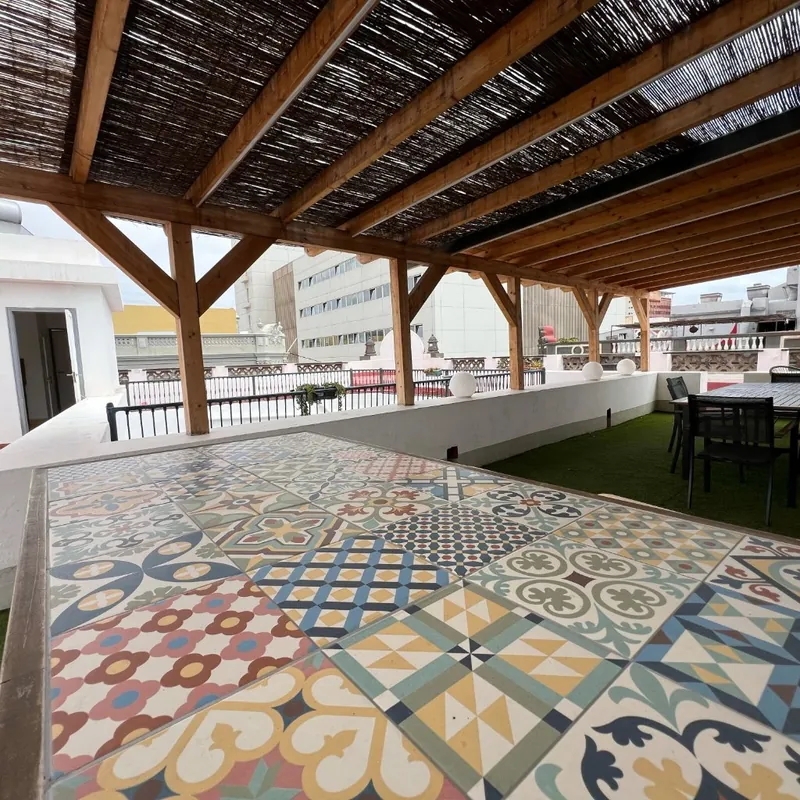
1907 Coliving

Anceu Coliving

Banama

BelVillage

Bencomo Coliving