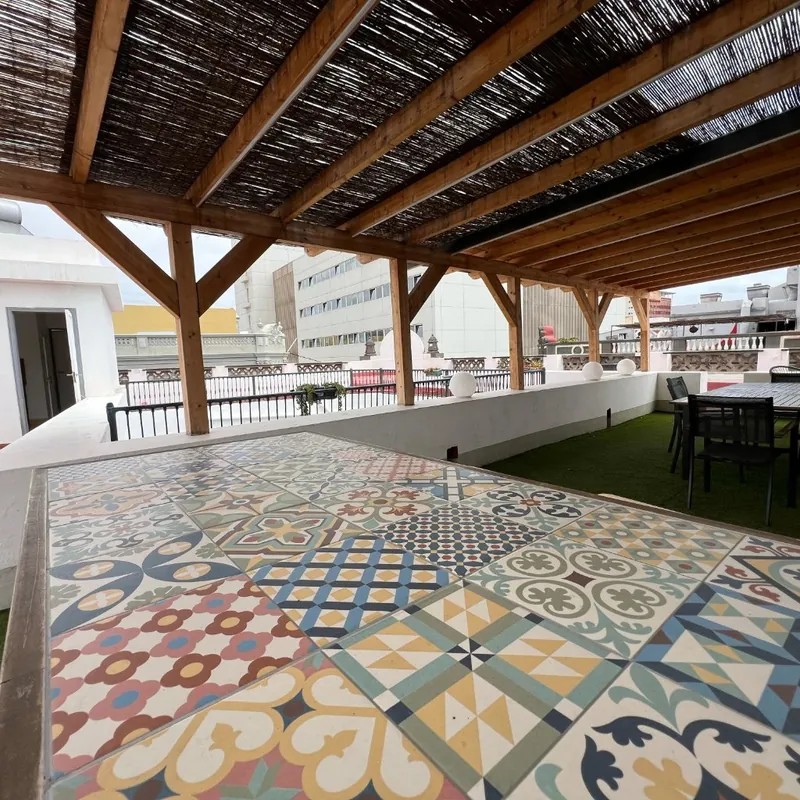
Around 60% of guests at Casa Basilico have been solo women travelling alone — and that ratio is consistent across the better pop-up colivings I’ve audited for this site. Coliving is, on balance, safer than solo Airbnb travel for women. But the safety gap between the best and worst colivings is huge. Here’s how to land on the right side of it.
Why coliving is generally safer than the alternatives
Three structural reasons:
- You arrive to a community, not an empty apartment. On day one, you’re introduced to 8-25 people. Strangers are vetted and screened before they become housemates.
- Staff is reachable. Most well-run colivings have on-site managers or a 24/7 contact. Compare that to an Airbnb host in another country.
- Built-in local network. Within 48 hours you have people who know which neighborhoods to avoid at night, where the safe taxis stop, and which doctor speaks English.
That’s the average case. The worst-case coliving — no screening, no staff, no rules — is worse than a good hotel. The bar matters.
The five questions to ask before you book
When you email the coliving (or get on a call before paying), ask these five. Any hesitation on any of them is a red flag:
- “What percentage of your past guests have been solo female travelers?” Healthy answer: 30-60%. Below 20% means the social fabric isn’t built for solo women.
- “Do you have female-only rooms, or a female-only floor?” Even if you book private, knowing the option exists tells you the operator has thought about this.
- “What does your application or screening process look like?” Healthy answer: a real conversation, an application form, social media check, references. “We accept anyone with a credit card” is a red flag.
- “Who’s on staff — and is the manager reachable 24/7?” Healthy answer: at least one woman on the team, a phone number that works at 2am.
- “Can you connect me with two past solo female guests?” Best operators say yes immediately.
Private room vs shared room — what solo women actually pick
From our internal data on the 98 vetted colivings we listed in May 2026:
- 70% of solo female bookings are private rooms, even when shared is significantly cheaper.
- 20% book mixed-gender shared rooms at colivings they’ve researched heavily.
- 10% book female-only shared rooms when offered.
If a coliving doesn’t offer a female-only shared option and you’d prefer one, ask. Most can arrange it for the right group, especially in pop-up colivings where they assemble cohorts.
Red flags during research
Pull up the website and the Instagram. These signals matter:
- No team page, or the entire team is men. Operators who care about female safety usually have at least one woman on the visible team.
- Marketing photos with no women in them. Tells you who actually goes there.
- No published house rules or code of conduct. Even a basic “no harassment, no entering shared rooms uninvited” policy shows the operator has thought about it.
- Reviews mention “creepy guest” or “no response from staff.” Take those seriously, even if the average rating is high.
- Remote rural location with no public transport, in a country you don’t know. This is the highest-risk profile. Default to no unless the operator answers all five questions perfectly.
Destinations that consistently work for solo women
Based on recurring reports from solo female nomads across 2024-2026:
- Portugal — Lisbon, Madeira, Porto. English everywhere, low street crime, dense nomad community.
- Spain — Canary Islands (Tenerife, Gran Canaria), Tarifa, Barcelona neighborhoods like Gracia.
- Mexico — Mexico City (Roma/Condesa), Oaxaca, Mérida, Puerto Escondido. Avoid Tulum and Playa del Carmen for solo-first stays.
- Colombia — Medellín (El Poblado, Laureles only). Take the rest of Colombia case-by-case.
- Thailand — Chiang Mai is the gold standard. Bangkok is fine. Islands depend on the specific coliving.
- Bali — Canggu and Ubud. Avoid coliving in Kuta.
- Brazil — Pipa, Florianópolis, parts of Rio (Ipanema). Some Brazilian destinations are great; some require local knowledge.
What we do at Casa Basilico (and what to look for elsewhere)
For full transparency, here’s our policy:
- Application call before booking (filters out most issues)
- House rules signed at check-in
- Female team members at every chapter
- WhatsApp group manager on call 24/7
- Female-only rooms when there’s demand for one
- We’ve never had a serious safety incident in 180+ guests
You don’t need to use Casa Basilico, but you should not book any coliving that can’t match this checklist.
A final note
Solo female travelers built the modern coliving sector. Most of the early adopters at every coliving I’ve worked with were women travelling alone — they were the ones brave enough to try it before it was mainstream. The good operators know this. Hold them to it.
For a curated list of solo-female-friendly colivings filtered by destination and vibe, use the quiz.
Last updated May 2026 by Fabio Deriu, co-founder of Casa Basilico.